
VIDEO
CONTENT
QUIZ
MATERIALS
Introduction
Physical Characteristics
Habitat and Distribution
Diet and Feeding Habits
Behavior and Lifestyle
Reproduction and Life Cycle
Conservation Status
Interesting Facts
Overview and Classification: Crocodiles are formidable amphibious reptiles within the Crocodylia order, encompassing 23 species including crocodiles, alligators, caimans, and gavials. They are distinguished by their lizard-like appearance and carnivorous habits.
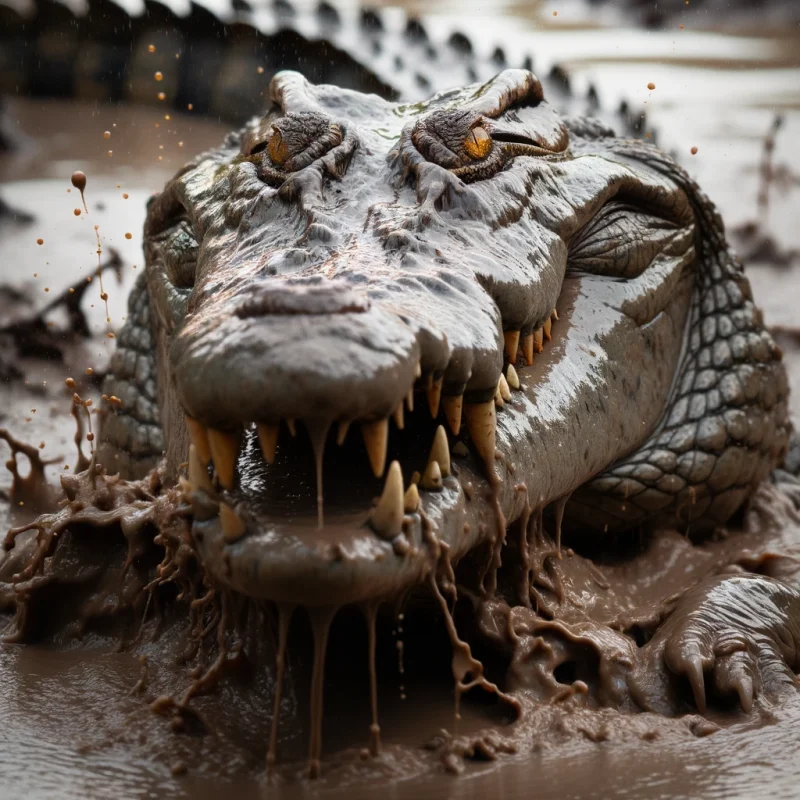
Physical Features: Crocodiles are characterized by powerful jaws, replete with conical teeth, short legs with clawed, webbed toes, and a distinct body structure. Their eyes, ears, and nostrils are positioned to remain above water while the majority of the body stays submerged.
Size and Strength: As the largest and heaviest modern reptiles, certain species, like the Nile and saltwater crocodiles, can reach up to 7 meters (23 feet) in length and weigh over 1,200 kg (nearly 2,650 pounds).
Anatomy: They possess a long, muscular tail, and their skin is tough and plated. The snout is relatively long, varying across species, with regular patterns of scales and thick bony plates on the back.
Aquatic Adaptations: Crocodiles stand out among crocodilians due to more webbing on their hind feet and specialized salt glands, enabling better saltwater tolerance.
Lifestyle: These semi-aquatic reptiles spend much time swimming but, being cold-blooded, require basking on land for warmth.
Dietary Habits: Entirely carnivorous, crocodiles have potent stomach acid, allowing them to digest bone and shell, and feed on diverse prey.
Growth and Lifespan: Crocodiles continually grow throughout their lives, with some species reaching 75 years of age.
Predatory Efficiency: Their streamlined body aids in swift swimming, with feet tucked to the side to decrease water resistance.
Coloration: Generally grayish-green, some species like the Nile Crocodile vary from dark olive-green to bronze, brown, or gray.
Behavioral Traits: Notably aggressive, crocodiles differ from other crocodilians in this aspect, contributing to their success as predators.
Physical Characteristics
Body Structure and Size
- General Build: Crocodiles are large reptiles with a powerful build, known for being the largest and heaviest of contemporary reptiles.
- Size Variations: The most sizable species, like the Nile and saltwater crocodiles, can reach lengths of up to 7 meters (about 23 feet) and weigh over 1,200 kg (nearly 2,650 pounds).
Head and Jaws
- Snout: They possess a relatively long snout, which varies in shape and size among species.
- Jaws and Teeth: Their jaws are robust, equipped with numerous conical teeth designed for their carnivorous diet.
Skin and Scales
- Skin Texture: The skin of crocodiles is thick and plated, providing protection and aiding in camouflage.
- Scales: Most of their body is covered in regularly arranged scales, with thick, bony plates on their back.
Limbs and Tail
- Legs and Feet: Crocodiles have short legs with clawed, webbed toes, aiding in both aquatic and terrestrial movement.
- Tail: The tail is long and massive, playing a critical role in swimming.
Aquatic Adaptations
- Swimming Abilities: Their streamlined body and the ability to tuck feet to the side while swimming make them fast and agile in water.
- Webbed Feet: They have more webbing on the hind feet, a feature distinct from other crocodilians.
- Salt Glands: Specialized salt glands enable them to tolerate and filter out saltwater, setting them apart from other members of the Crocodylia order.
Thermoregulation
- Cold-Blooded Nature: As cold-blooded reptiles, crocodiles spend time on land to warm up in the sun.
Diet and Digestion
- Carnivorous Diet: They are strictly carnivorous, capable of digesting bone and shell thanks to their potent stomach acid.
- Feeding Habits: Crocodiles can consume a wide range of prey, depending on their size and strength.
Growth and Lifespan
- Continuous Growth: Crocodiles grow throughout their lifespan, with older animals typically being larger.
- Lifespan: Some species can live for up to 75 years.
Coloration
- General Color: Their coloration is usually grayish-green, providing natural camouflage.
- Variations: The Nile Crocodile, for instance, can have a skin color ranging from dark olive-green to bronze, brown, or gray.
Behavioral Traits
- Aggression: Known for high levels of aggression, crocodiles exhibit more territorial and predatory aggression compared to other crocodilians.
Habitat and Distribution of Crocodiles
General Habitat
- Habitat Preference: Crocodiles primarily inhabit the lowland, humid tropics of both the Northern and Southern hemispheres. Their semi-aquatic nature means they are commonly found in freshwater environments like rivers, lakes, and wetlands, and they are also known to inhabit brackish and saltwater areas.
- Temperature Sensitivity: These reptiles are sensitive to cold temperatures, which is why their distribution is mostly limited to tropical and subtropical regions.
Geographical Distribution
- “True Crocodiles” (Family Crocodylidae): This family is widespread, occurring in parts of Africa (south of the Sahara), Madagascar, India, Sri Lanka, Southeast Asia, the East Indies, northern Australia, Mexico and Central America, the West Indies, and northern South America.
- American Crocodile Habitat: In the Caribbean, the American crocodile is found in coastal areas and is particularly adaptable, residing in both brackish and saltwater environments such as ponds, coves, and creeks within mangrove swamps. In South Florida, they are sometimes seen in freshwater due to the extensive canal system. Their range extends from South Florida through the Caribbean, along the Pacific coast from Mexico to Peru, and the Caribbean coast from southern Mexico to Venezuela.
Impact of Human Activities
- Population Decline: Crocodile populations have been affected by human expansion and land use changes, reducing their natural habitats. Overhunting for their skins, which are valued in the leather industry for products like handbags, shoes, and belts, has also significantly depleted many species. Additionally, local usage for meat and medicinal purposes is widespread.
- Conservation Efforts: Despite these threats, concerted conservation efforts, including improved national protection, habitat conservation, and international regulation of trade, have facilitated recovery for many crocodile populations. Currently, about half of the 23 species are considered to have a stable population with a low risk of extinction.
Diet and Feeding Habits of Crocodiles
General Dietary Characteristics
- Carnivorous and Opportunistic: Crocodiles are carnivorous, opportunistic feeders, meaning their diet includes a wide variety of prey they can overpower or surprise. This diet varies with their size and age.
Diet of Young Crocodiles
- Initial Diet: Hatchlings and young crocodiles primarily consume small prey like insects, small frogs, lizards, and crustaceans.
- Variety in Insect Diet: Their diet includes over 100 species and genera of insects, such as beetles, giant water bugs, crickets, and dragonflies.
Diet of Adult Crocodiles
- Larger Prey with Growth: As they grow, adult crocodiles target larger prey, including fish, birds, turtles, and mammals like wild boar, wildebeest, deer, and other small hoofed animals.
- Preying on Large Mammals: They are capable of attacking substantial prey like buffalo, cattle, horses, and occasionally young elephants and giraffes.
Scavenging Behavior
- Scavenging: Adult crocodiles also scavenge, feeding on carcasses when available.
- Dietary Flexibility: They are not picky eaters and will consume snails, other mollusks, or carrion in times of food scarcity.
Feeding Habits and Techniques
- Nocturnal Feeding: Crocodiles typically feed at night, but will also hunt during the day if the opportunity arises.
- Hunting Strategy: They often use a “sit and wait” tactic, snapping at any disturbances within reach while lying in shallow water.
- Eating Method: With powerful jaws meant for grasping, crocodiles either swallow small prey whole or tear larger prey into pieces, lacking teeth for shearing or slicing.
Frequency of Feeding
- Slow Metabolism: Crocodiles have a slow metabolism, allowing them to go long periods without eating. They consume about 50 full meals a year.
- Feeding Young Crocodiles: Young crocodiles need feeding once to thrice a week, with the portion being about 5% of their body weight.
Unusual Dietary Habits
- Ingesting Rocks: Crocodiles have been known to ingest rocks, which is thought to aid in digestion.
- Fruit Consumption: Recent studies have revealed crocodiles eating fruits like wild grapes, elderberries, and citrus fruits directly from trees, indicating a possible role in seed dispersal.
Behaviour and Lifestyle of Crocodiles
General Behavior
- Nocturnal Nature: Crocodiles are primarily active at night, spending most of their time in the water. They are also capable of making significant overland journeys.
- Predatory Skills: As predators, they have developed various hunting strategies to efficiently capture prey.
Hunting and Feeding Behaviour
- Ambush Hunting: Crocodiles are adept at ambush hunting. They wait for potential prey, either fish or land animals, to come close before launching a rapid attack.
- Hunting Techniques: In water, they capture prey with a swift sideways movement of the muzzle. Sensitive pressure receptors near their mouth help detect motion in dark or murky waters. On land, they often wait near water edges, lunging suddenly to seize and drown unsuspecting animals.
Social Behaviour
- Communication: Crocodiles communicate through a range of sounds like hisses, grunts, chirps, burps, and growls, as well as through physical displays such as head slapping, body arching, and bubble blowing.
- Territoriality and Hierarchy: Male crocodiles are territorial and conscious of their status. They establish a hierarchy that allows them to coexist in crowded conditions and avoid conflicts. This social structure contributes to their longevity.
Growth and Maturity
- Early Growth: Hatchlings emerge at about 20–30 cm (8–12 inches) long and initially stay hidden to avoid predators. In the first few years, they grow approximately 30 cm (about 1 foot) per year.
- Rate of Growth: The growth rate slows down over time, but crocodiles continue to grow throughout their lives.
- Sexual Maturity: Crocodiles reach sexual maturity around the age of 10, usually at a length of 1.5–3 meters (5–10 feet).
Lifespan
- Longevity in Captivity: In captivity, crocodiles can live up to 70 years or more.
- Wild Lifespan Estimates: While exact lifespans in the wild are not well-documented, studies of bone growth rings suggest that wild crocodiles have similar lifespans to those in captivity.
Reproduction and Life Cycle of Crocodiles
Reproduction Patterns
- Sexual Reproduction: Crocodiles reproduce sexually, with specific courtship and mating rituals that vary by species and environment.
- Nesting Types: They can be categorized as “pulse nesters,” where all females in a population nest within a few weeks, or “prolonged nesters,” with a nesting season lasting over six months.
Courtship and Mating
- Male Displays: Males perform various displays to attract females, including head slaps on the water, body vibrations, and snout rubbing.
- Mating Process: Interested females engage with the male, leading to mating. The time from mating to egg-laying varies among species, typically around three weeks for American Alligators.
Nesting and Egg Laying
- Nesting Habits: Crocodiles are either hole nesters, who excavate and bury their eggs, or mound nesters, who construct elevated nests to avoid flooding.
- Egg Quantity: The number of eggs laid depends on the species, location, and size of the crocodile, ranging from 10 to 100 eggs.
Hatching and Early Life
- Female Assistance: Females may help hatchlings by gently rolling and squeezing the eggs.
- Young Crocodiles: After hatching, young crocodiles are often independent, though some species, like American Alligators, exhibit parental protection for up to a year.
Growth and Maturity
- Rapid Early Growth: In their initial years, crocodiles grow about 30 cm (1 foot) per year. This rate slows down but continues throughout their life.
- Age of Maturity: Crocodiles typically reach adulthood between 8 and 10 years of age.
Lifespan
- Longevity: In the wild, crocodiles can live up to 70 years, with some species like the Saltwater Crocodile living even longer.
- Continuous Growth: Crocodiles grow continuously and do not die of old age, with death usually resulting from external factors.
Unusual Reproductive Phenomenon
- Parthenogenesis: This rare form of asexual reproduction, where embryos develop from unfertilized eggs, has been observed in crocodiles. It suggests that under certain conditions, females can reproduce without males, although this is not typical and requires further research.
Conservation Status of Crocodiles
Overview
- Number of Species: 24 species of crocodilians.
- IUCN Red List Classification:
- 7 species listed as “Critically Endangered”.
- 4 species listed as “Vulnerable”.
- 12 species listed as “Least Concern”.
Examples of Different Species
- American Crocodile:
- Status: “Vulnerable”.
- Development: Improved from endangered to threatened since 1975.
- Orinoco Crocodile:
- Status: “Critically Endangered”.
- Development: Status improved due to increased protection and reintroduction programs.
- Freshwater Crocodile:
- Status: “Lower Risk/Least Concern”.
Main Threats
- Habitat Loss: Due to agriculture expansion, deforestation, urban development.
- Previous Threats: Unregulated hunting for their valuable skins.
- Current Threats: Habitat loss, illegal hunting.
Conservation Initiatives
- Target: 7 species classified as “Critically Endangered”.
- Measures: Reintroduction programs, improved national and international protection, habitat conservation.
- Successes: Recovery of populations in certain regions.
Successes and Challenges
- Successes: Increase in certain crocodile populations.
- Challenges: Balancing growing crocodile populations with human safety.
- Ancient Lineage: Crocodiles are known as living fossils, having existed for over 200 million years, which makes them one of the most ancient reptile lineages on Earth.
- Size and Longevity: The saltwater crocodile is the largest species, reaching up to 23 feet and weighing over 2,000 pounds. Crocodiles are also known for their long lifespan, often living for more than 70 years.
- Powerful Jaws: Known for their powerful jaws, crocodiles primarily eat fish but also hunt mammals, birds, and other reptiles. Their “death roll” is a notable hunting technique.
- Teeth Replacement: A crocodile can go through as many as 4,000 teeth in its lifetime.
- Virgin Births: Crocodiles have been found capable of self-reproduction, a characteristic previously known only in certain birds, fish, and reptiles.
- Habitat: These large semiaquatic reptiles inhabit tropical regions across Africa, Asia, the Americas, and Australia.
- Speed: Crocodiles are fast swimmers, reaching speeds up to 22 mph, and can hold their breath underwater for about an hour.
- Crocodile Tears: The phrase “crocodile tears” refers to the tears crocodiles produce when eating. However, this is not a sign of emotion.
- Temperature-Dependent Sex Determination: The gender of a crocodile hatchling is determined by the temperature of the egg.
- Survivors of Mass Extinction: Crocodiles coexisted with dinosaurs and survived the mass extinction event that led to the dinosaurs’ demise.