Skip to content
VIDEO
CONTENT
QUIZ
MATERIALS
Quick Facts
Key Features
Surface Anatomy
Ossification
Variations
Clinical Correlates
Quick Facts
- Location: Hand
- Bone Type: Short bone
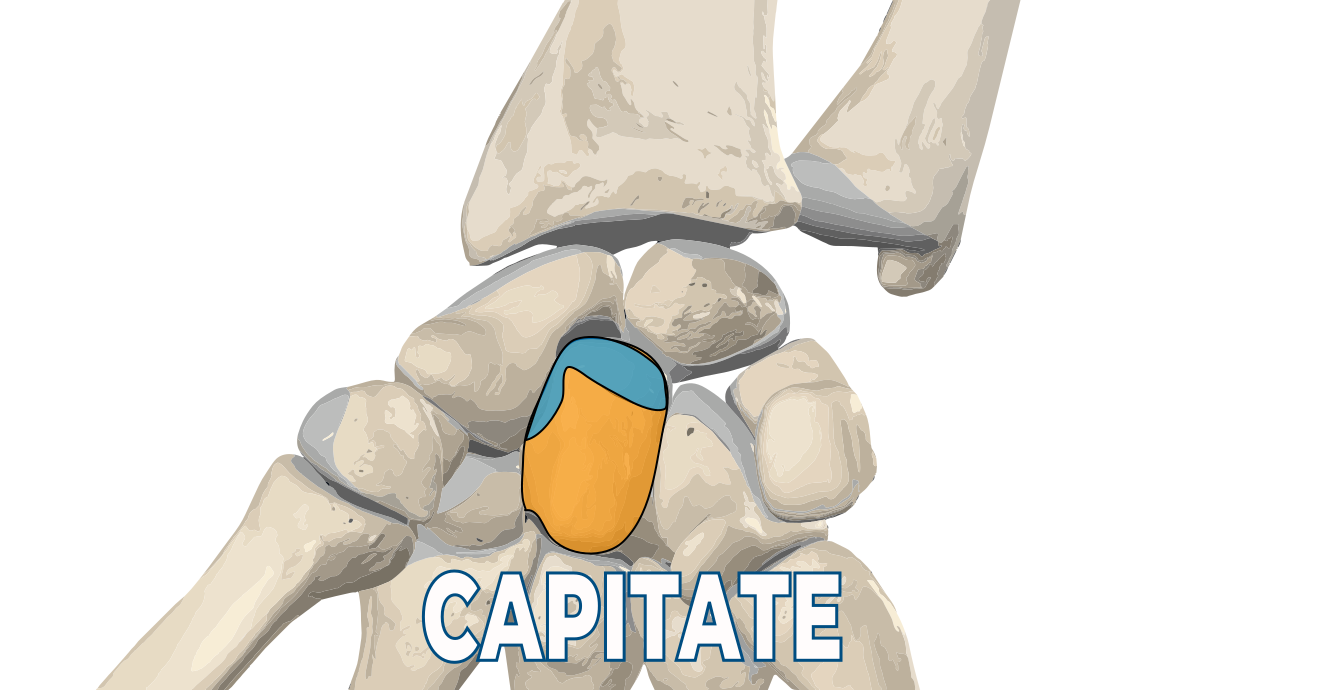
- Key Features: Head, base, palmar and dorsal surfaces; scaphoid and hamate articular facets
- Articulation: Trapezoid, scaphoid, lunate, hamate bones; second, third, and fourth metacarpal bones
- Arterial Supply: Deep palmar arch, dorsal carpal branch of radial artery, dorsal carpal branch of ulnar artery
Key Features & Anatomical Relations
- General Description: The capitate is the largest of the eight carpal bones in the hand.
- Physical Characteristics:
- Parts: Head and base
- Surfaces: Palmar and dorsal
- Landmarks: Articular facets for trapezoid, scaphoid, lunate, hamate bones; facets for second, third, and fourth metacarpal bones
- Location & Articulation:
- Proximal to: Second, third, and fourth metacarpal bones
- Distal to: Lunate bone
- Medial to: Scaphoid and trapezoid bones
- Lateral to: Hamate bone
- Articulates at: Trapeziocapitate, scaphocapitate, lunocapitate, capitohamate joints; carpometacarpal joints (second, third, and fourth metacarpals)
Surface Anatomy
- Palpation: The capitate bone can be palpated on the dorsal aspect of the wrist, proximal to the third metacarpal bone
Ossification
- Ossification Center: Appears within the second month after birth
- Complete Ossification: Occurs during early adolescence
Variations
- Carpal Fusion: Coalition between the capitate and hamate bones, forming the capitohamate bone
- Accessory Bone: The os centrale may be present between the scaphoid, capitate, and trapezoid bones
Clinical Correlates
- Fracture: Capitate bone fractures